

AI for Early Lameness Detection in Horses Gait Analysis, Sensor Technology, and Artificial Intelligence in Modern Equine Care
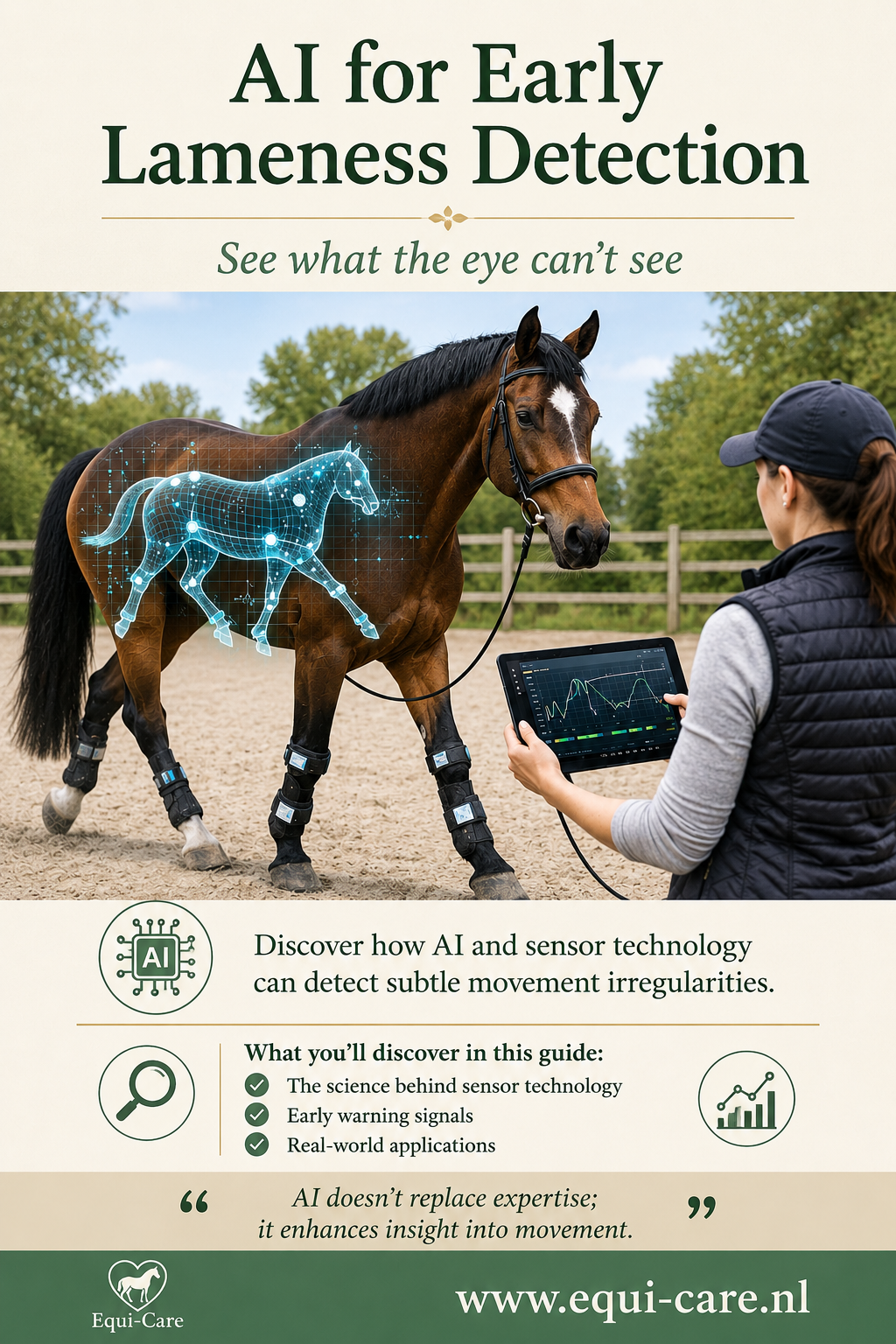
Lameness rarely develops overnight. Weeks or even months before a horse shows an obvious uneven gait, subtle changes in movement, symmetry, or weight-bearing are often already present. In practice, precisely these slight signals regularly go unnoticed. This guide demonstrates how modern sensor technology and artificial intelligence can help make movement abnormalities visible earlier—well before they become distinct to the human eye.
"AI for Early Lameness Detection in Horses" translates complex technology into clear, practical information for horse owners, trainers, stable managers, and veterinarians. It is not intended to replace horsemanship or a feel for the horse, but rather to support objective observation and preventative care.
What you will discover in this guide
The guide begins at the foundation: why early detection of lameness is so critical for equine welfare, training, and long-term soundness. You will read about how traditional observation remains invaluable, yet has its limitations when abnormalities are still subtle.
Next, it explains how wearable sensors work and what data they collect during the walk, trot, and canter. Concepts such as accelerometers, gyroscopes, and gait analysis are explained clearly and practically, without becoming technically overwhelming.
The role of artificial intelligence is also covered in depth. You will learn how AI recognizes patterns across thousands of equine movements and why systems can sometimes detect deviations sooner than the human eye. At the same time, the guide clearly outlines the limits of this technology and explains why interpretation by experienced professionals remains essential.
Furthermore, you will discover how reliable data is collected and processed—from sensor placement and testing conditions to filtering, normalization, and building a personalized baseline for every individual horse.
The guide also dives deep into model development and validation. You will gain insight into how AI systems learn, how margins of error occur, and why diversity in datasets is important to achieve reliable analyses for different types of horses.
In addition, significant attention is paid to practical stable management. How do you implement such a system into your daily routine? How do you prevent misinterpretations? How do you ensure that technology remains supportive of equine welfare rather than dictating it?
The benefits for the horse, rider, and veterinarian are also discussed. Early detection can help identify overloading more quickly, allow training schedules to be adjusted in a timely manner, and prevent long-term injuries. In doing so, the guide shows how objective data can improve communication between equine professionals.
Finally, this guide addresses important ethical questions surrounding AI and monitoring. When does technology serve as a helpful tool, and when do we risk viewing the horse merely as a dataset? It is precisely this nuance that makes this guide so valuable within modern equine care.
Who is this guide for?
This guide is suitable for: Riders, trainers, veterinarians, rehabilitation professionals, stable managers, and horse owners who want to better understand early lameness detection, gait analysis, sensor technology, and AI within equine welfare and training.
Topics in this guide
- Early detection of lameness
- Equine gait analysis
- Sensors and AI technology
- Data collection and monitoring
- Injury prevention
- Rehabilitation and recovery monitoring
- Practical stable implementation
- Ethics and the future of AI in equine care
What makes this guide unique
This guide combines modern technology with a welfare-centered perspective on horses. It is written not solely from a performance-driven mindset, but from the belief that identifying subtle changes early can contribute to a healthier, more sustainable, and fairer life for the horse.
Related Equi-Care guides
Pairs well with:
- Welfare Under a Magnifying Glass
- Hoof Mechanism & Blood Circulation
- Osteoarthritis in Horses
- Kissing Spines in Horses
Exclusively available digitally via Equi-Care
You will receive a download link immediately after purchase.
Digital products cannot be returned or canceled.


